

Orthodontic

Living in Los Angeles, we know that every dollar counts—especially when it comes to investing in your family’s health and confidence. If you or your child needs orthodontic treatment, you might be sitting on a “hidden discount” without even knowing it.

At Super Orthodontics here in Encino, Los Angeles, we help families every day navigate the financial side of treatment. Led by Dr. Amir Assefnia, our Board-Certified Orthodontist and UCLA clinical faculty member, we want to ensure you maximize your benefits before they expire.

This guide will break down exactly how Flexible Spending Accounts (FSA) and Health Savings Accounts (HSA) work, specifically focused on how you can use them to make braces or Invisalign more affordable.

What Are FSA and HSA?

Both FSA (Flexible Spending Account) and HSA (Health Savings Account) are tax-advantaged accounts that allow you to set aside money from your paycheck before taxes are taken out. You can then use this “pre-tax” money to pay for qualified medical and dental expenses, including orthodontic treatment.

  • FSA (Flexible Spending Account): Usually offered by your employer. The key rule here is “use it or lose it”—funds generally expire at the end of the year if not used (though some plans offer a grace period or small rollover).

  • HSA (Health Savings Account): Available if you have a High Deductible Health Plan (HDHP). These funds do roll over year to year and are yours forever, even if you change jobs.

Pro Tip: You can use these funds in addition to your dental insurance. For example, if your insurance covers $1,500 of treatment, you can pay the remaining balance using your FSA or HSA dollars, effectively saving you the cost of taxes on that money.

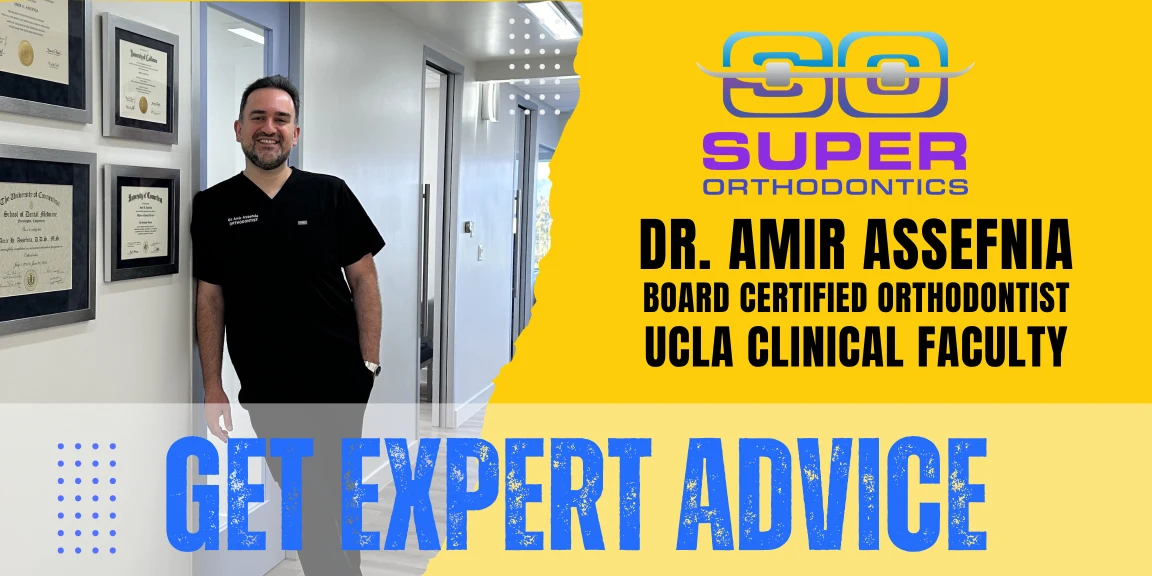
Expert Advice from Dr. Amir Assefnia, Board Certified Orthodontist and UCLA Clinical Faculty

Deep Dive: The Flexible Spending Account (FSA)

Since most open enrollment periods happen at the end of the year, FSA is the most time-sensitive topic for our Encino patients.

Maximum Contribution Limits

The IRS sets a limit on how much of your own money you can contribute to your FSA each year. For example:

  • 2024 Limit: $3,200 per employee.

  • 2025 Limit: $3,300 per employee.

Note: If you and your spouse both have plans through separate employers, you can EACH contribute the maximum.

Whom Can You Pay For?

You are not limited to using your FSA solely for yourself. You may use your FSA funds to pay for orthodontic treatment for:

  • Yourself.

  • Your spouse.

  • Your dependents (children) who are claimed on your tax return.

  • Adult children up to age 26 (even if they are not your tax dependent as long as they have not attained age 27 as of the end of the taxable year).

Reference: IRS Notice 2010-38 clarifies that adult children are eligible for FSA reimbursement through the year they turn 26, regardless of whether they live with you, are married, or are financially independent.

Open Enrollment: The Critical Window

For most employees in the Los Angeles, San Fernando Valley, and other locations, Open Enrollment occurs in October or November. This is the only time you can elect how much money to put into your FSA for the upcoming year, unless you have a “Qualifying Life Event” (like a birth or marriage).

Planning for the next year? If you or your child needs braces next year, Open Enrollment is the time to calculate the cost and elect the maximum contribution during your open enrollment.

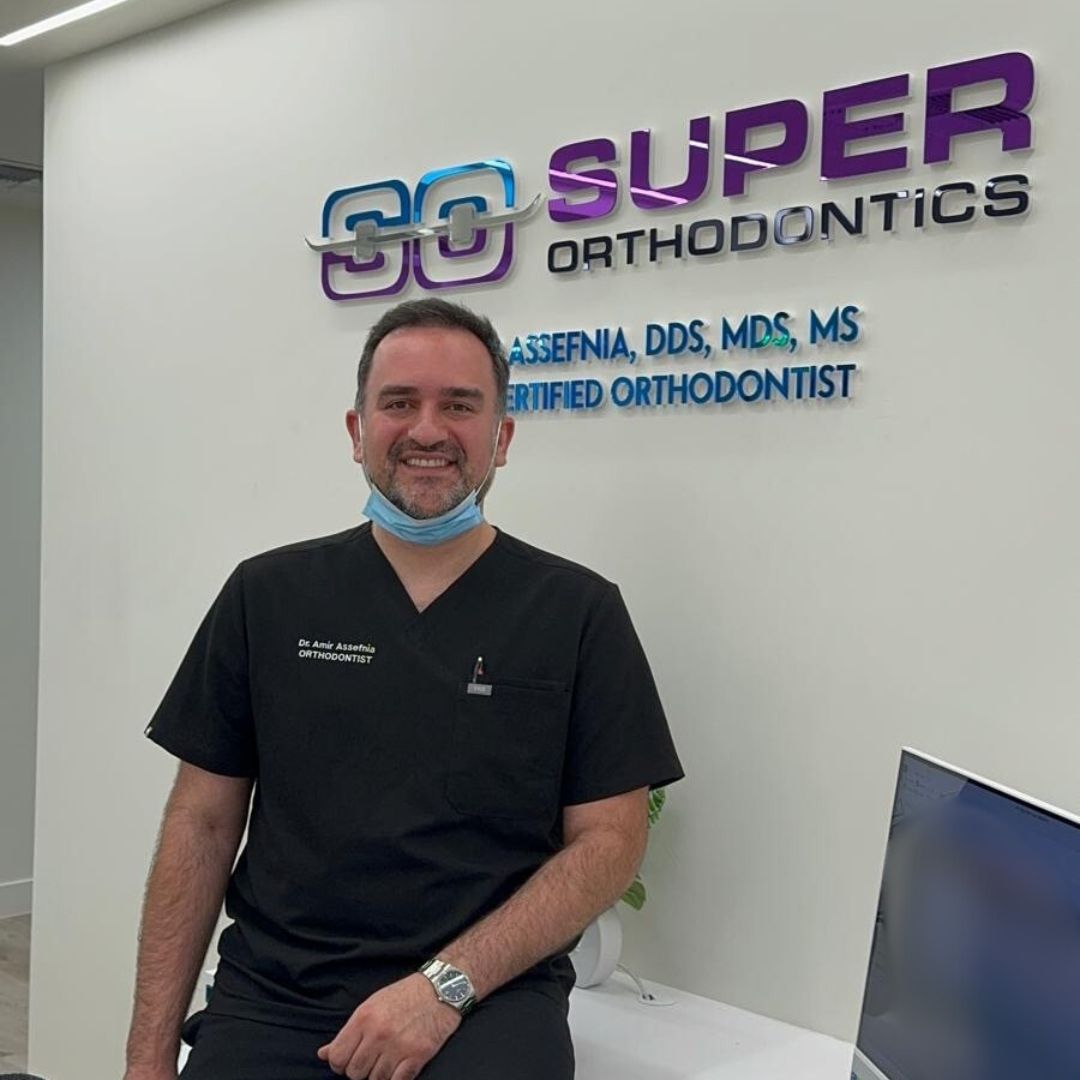
Dr. Amir Assefnia, Premier Board Certified Orthodontist, Super Orthodontics, in Encino, Los Angeles, CA

Real-World Savings: The Power of Pre-Tax Deductions

The magic of an FSA is that it lowers your taxable income. When you pay for braces or Invisalign or other orthodontic procedures out of your pocket, you are using “after-tax” dollars. When you use an FSA, you are using “pre-tax” dollars.

How to Estimate Your Tax Bracket

To understand your savings, you need to know your tax bracket. You can find this by looking at your Form 1040 (Federal Tax Return Form) from last year or checking your pay stub for year-to-date income. Tax brackets may start around 10% and will increase based on your income level.

Don’t forget California State Tax! In Encino, Los Angeles, San Fernando Valley, and other locations in California, most of us also pay California state income tax, which in most cases can add another 4% to 9.3% on top of federal taxes.

Example Savings Scenario (20% Tax Bracket)

Let’s keep the math simple. Assume your combined effective tax rate (Federal + State) is 20%.

  • Treatment Cost: $3,000

  • Payment Method: FSA

  • Tax Savings: $600

How it works: If you tried to pay $3,000 from your regular bank account, you would have had to earn $3,750 in gross salary(before taxes) to take home that $3,000 (because $750 would go to taxes). By using your FSA, you only need to earn $3,000 to pay for $3,000 worth of treatment. You instantly saved $750 in gross earnings (or $600 in cold hard cash staying in your pocket).


How It Is Deducted From Your Salary

Many patients at Super Orthodontics ask us how the money actually gets deducted from their salary and put into the FSA account. It happens automatically through your payroll. Note that your employer or their representatives will handle the administrative setup of your FSA. You generally do not need to open a separate bank account yourself; you only need to declare how much you would like to contribute for the year.

The “Salary Deduction” Example: Let’s say you decide to contribute $2,600 to your FSA for the year to cover your child’s Phase 1 treatment.

  1. Annual Election: You tell your HR department during Open Enrollment: “I want to contribute $2,600.”

  2. Pay Periods: If you are paid every two weeks (26 pay periods per year), your employer divides the total by 26.

  3. The Deduction: $2,600 ÷ 26 = $100.

  4. The Paycheck: On every paycheck, you will see a line item (often labeled “Flex Med” or “FSA 125”) deducting $100.

  5. The Benefit: That $100 is taken out before taxes are calculated. So, you are only taxed on the remaining salary, lowering your tax bill every single payday.

Total Savings if you pay with your FSA funds vs after-tax out-of-pocket = $2,600 * 20% = $520

Crucial Orthodontic Benefit: FSA funds for orthodontic treatment are often available as a “lump sum” immediately on January 1st, even though you haven’t contributed the full amount from your paycheck yet!


A Note for Our Encino, Los Angeles & California Neighbors

While federal rules apply everywhere, there is a specific nuance for us here in California regarding HSAs:

  • Federal: HSA contributions are tax-free.

  • California State: California is one of the few states that does not conform to federal HSA tax breaks. This means your HSA contributions are taxable on your state tax return.

  • FSA: However, FSA contributions remain tax-free for both Federal and California state taxes. This often makes the FSA a slightly more tax-efficient vehicle for immediate expenses like braces for California residents.

What Exactly Can FSA Pay For at Super Orthodontics?

You can use your FSA for almost all orthodontic fees, including:

  • Phase 1 Treatment for children.

  • Braces.

  • Clear aligners (Invisalign).

  • Retainers.

Note: Cosmetic procedures like teeth whitening are generally NOT eligible.

Dr. Amir Assefnia, Board Certified Orthodontist

How Super Orthodontics Can Help

Navigating insurance and FSAs can be confusing, but you don’t have to do it alone. We are located right here in Encino, Los Angeles, and we specialize in helping families maximize their benefits.

We can provide:

  1. Detailed Invoices: The specific documentation FSA providers require to approve your claim.

  2. Flexible Payment Structures: We can set up payment plans that align with your FSA availability.

  3. Expert Advice: Our team will explain which treatments qualify, helping you maximize your benefits and avoid surprise rejections.

No FSA? No Problem!

If your employer does not offer an FSA, don’t be disappointed! We believe everyone deserves a spectacular smile. Ask us about our current specials and flexible financing options. We are committed to finding a financial arrangement that works for your budget so you can still achieve the smile you’ve always wanted.

Ready to Use Your Benefits?

Don’t let your “Use It or Lose It” FSA funds vanish on December 31st!

Next Step: Check your FSA balance right now. If you have remaining funds, call us immediately—we can often start records or treatment before the year ends to secure those savings for you!

Contact Super Orthodontics today to schedule your complimentary consultation.  At Super Orthodontics, we offer personalized orthodontic care designed to meet your specific needs. Schedule your consultation with Dr. Amir Assefnia today and take the first step toward achieving a healthier more confident smile.

Disclaimer: The information provided in this article is for educational and informational purposes only and does not constitute financial, tax, or legal advice. Tax laws, contribution limits, and eligible expenses are subject to change and vary by individual circumstances. Super Orthodontics and Dr. Amir Assefnia are not financial institutions or tax advisors. Please consult with a qualified CPA, tax professional, or financial advisor to determine the best strategy for your specific financial situation.

Final Word: Choose a Board-Certified Orthodontist—Not Just Any Dentist

Orthodontic treatment is an investment in your long-term health, function, and confidence. You only get one smile—make sure it’s in the right hands.

If you’re looking for a trusted, experienced, and highly-ranked orthodontist , come see us at Super Orthodontics. Your perfect smile starts here.

Expert Advice from Dr. Amir Assefnia, Board Certified Orthodontist and UCLA Clinical Faculty

Trust Your Smile to the Expert Who Truly Understands it!