Orthodontic

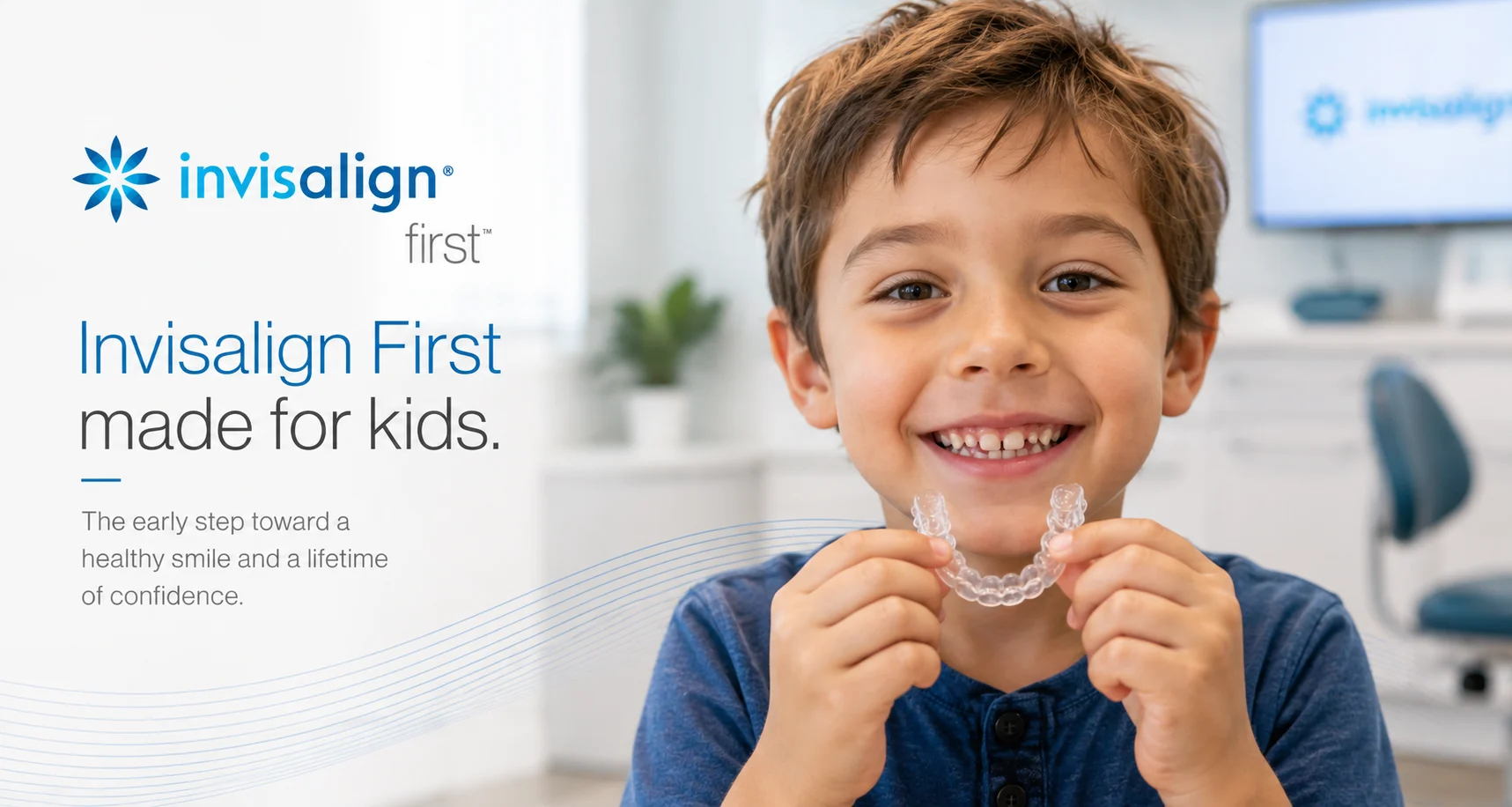
Early orthodontic treatment can set the foundation for a lifetime of healthy, straight teeth. Invisalign First is a clear aligner system designed specifically for children between the ages of 6 and 10. While it offers a comfortable and discreet alternative to braces, there are important factors to consider before choosing Invisalign First for your child. This guide will explore the benefits, potential challenges, and situations where traditional braces might be a better option.

What Is Invisalign First?

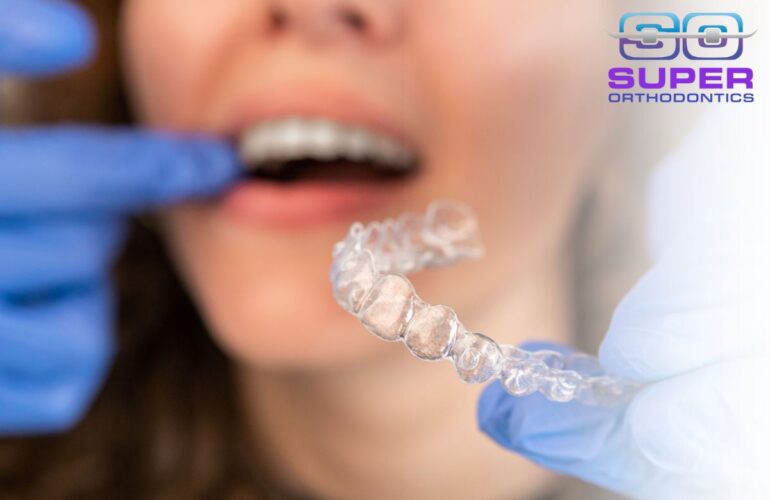
Invisalign First uses custom-made, clear plastic aligners to correct early dental issues in children. It is part of a Phase 1 treatment, which addresses problems like crowding, spacing, and jaw misalignment before all permanent teeth erupt. The aligners gently shift teeth and guide jaw development, creating space for incoming adult teeth and addressing functional issues early.

Who Can Benefit from Invisalign First?

Children aged 6 to 10 years with the following dental issues may benefit from Invisalign First:

    • Crowding or Spacing Issues: Helps align teeth when there is too much or too little space.
    • Crossbites or Open Bites: Corrects bite problems that can affect chewing and speech.
    • Jaw Expansion Needs: Guides the development of a wider jaw to accommodate permanent teeth.
    • Habit Correction: Manages thumb-sucking or tongue-thrusting habits that affect dental alignment.

Benefits of Invisalign First

    1. Aesthetic Appeal: The aligners are clear and less noticeable than traditional braces, which can boost a child’s confidence.
    2. Comfort: Made from smooth plastic, Invisalign First aligners cause less irritation to the gums and cheeks compared to braces.
    3. Removable: Kids can remove the aligners for eating, brushing, and flossing, promoting better oral hygiene.
    4. No Food Restrictions: Children can continue enjoying their favorite foods without worrying about damaging brackets or wires.
    5. Fewer Emergency Visits: No broken wires or brackets mean fewer trips to the orthodontist for repairs.

Cautions and Potential Challenges with Invisalign First

While Invisalign First offers many advantages, there are some important considerations and challenges:

    1. Compliance Is Key:
      The aligners must be worn 20-22 hours a day to be effective. Younger children may forget or resist wearing them, leading to slower or incomplete treatment.
    2. Lost or Damaged Aligners:
      Kids can misplace or damage their aligners, which may delay treatment or increase costs.
    3. Not Suitable for Severe Cases:
      Invisalign First may not be effective for complex orthodontic issues, such as severe bite misalignments or significant jaw discrepancies.
    4. Discomfort During Adjustments:
      Although less painful than braces, aligners can still cause discomfort when switching to a new set, as teeth are gradually shifting.
    5. Monitoring Oral Hygiene:
      While aligners can be removed for brushing and flossing, parents must ensure children clean their teeth thoroughly to avoid plaque buildup and cavities.

When Braces Might Be a Better Option

In some cases, traditional braces may be more effective or practical than Invisalign First. Here’s why:

    • Severe Orthodontic Issues: Braces are better suited for complex cases, such as extreme crowding, severe bite problems, or jaw misalignments.
    • No Compliance Concerns: Braces are fixed to the teeth, so there’s no need to worry about whether your child is wearing them as instructed.
    • Durability: Braces are more durable and less likely to be damaged, making them a good option for active kids who might lose or break aligners.
    • More Controlled Tooth Movement: Braces allow orthodontists to apply more precise pressure, which can be beneficial in complex cases.
    • Cost Considerations: While the costs of Invisalign First and braces are generally comparable, repeated replacement of lost aligners can make Invisalign more expensive

Invisalign First vs. Braces: Pros and Cons

FeatureInvisalign FirstBraces
AppearanceClear, nearly invisible alignersMetal brackets and wires, more noticeable
ComfortSmooth plastic, less irritation to cheeks and gumsWires and brackets may cause discomfort or sores
RemovabilityRemovable for eating and cleaningFixed, no risk of losing appliances
ComplianceRequires disciplined wear (20-22 hours/day)Always in place, no compliance concerns
HygieneEasier to brush and floss normallyRequires special tools for cleaning around brackets
Dietary RestrictionsNo restrictionsMust avoid sticky, hard, or chewy foods
CostSimilar, but aligners may add costs if lostGenerally stable, unless repairs are needed
Treatment for Complex IssuesLimited for severe casesEffective for all levels of complexity
Activity LimitationsNone, aligners can be removed for sportsMouthguards needed for contact sports

Is Invisalign First Right for Your Child?

Consider Invisalign First If:

    • Your child has mild to moderate orthodontic issues.
    • They are responsible and can commit to wearing aligners consistently.
    • Aesthetic concerns are a priority for your child.

Consider Braces If:

    • Your child has complex orthodontic issues that require more precise treatment.
    • They might struggle with keeping track of removable aligners.
    • Durability and low maintenance are important.

Why Early Orthodontic Treatment Matters

Starting orthodontic treatment early can prevent more serious issues from developing later. By addressing problems while the jaw is still growing, orthodontists can guide the development of teeth and bones, potentially reducing the need for invasive procedures in the future.

Final Thoughts

Invisalign First offers a modern, comfortable, and discreet option for early orthodontic treatment. However, it requires a high level of commitment and may not be suitable for every child. If your child needs early intervention, consult with a board-certified orthodontist to discuss whether Invisalign First or braces would be the best choice. By making an informed decision, you can set your child on the path to a healthy, confident smile.

Excellence in Care You Can Trust

Parent Questions, Answered

Invisalign First for Kids: Frequently Asked Questions

Questions Parents in Encino, Los Angeles, and the San Fernando Valley Ask Us About Invisalign First and Clear Aligners for Children

What age is Invisalign First for?

Invisalign First is designed for children roughly between ages 6 and 10 — the stage when a child still has a mix of baby and permanent teeth and the jaw is actively growing. That growth window is exactly what makes early treatment effective. The American Association of Orthodontists recommends a first orthodontic evaluation by age 7. Learn why age 7 matters.

How is Invisalign First different from regular Invisalign?

Regular Invisalign moves teeth that are all fully in place. Invisalign First is built for a mouth that's still changing: arch expansion is designed into the aligners themselves, and space is planned for permanent teeth that haven't erupted yet, so the plan keeps working as baby teeth come out and adult teeth come in. The treatment goal is different too — Phase 1 solves growth-related problems rather than perfecting every tooth.

What problems can Invisalign First correct?

It's used to relieve crowding, widen a narrow dental arch, create room for permanent teeth to erupt properly, close excess spacing, and correct bite issues such as crossbites and open bites. It can also support correction of habits like thumb sucking and tongue thrust. Which corrections apply to your child is determined at the consultation.

Is Invisalign First as effective as braces for kids?

For the mild to moderate corrections that Phase 1 typically targets, yes — provided the aligners are worn as prescribed. Braces remain the better tool for more complex corrections and for children who aren't yet ready to manage a removable appliance. Our board-certified orthodontist will tell you plainly which approach he'd recommend for your child and why.

How many hours a day does my child have to wear the aligners?

20 to 22 hours a day — essentially everything except eating, drinking anything other than water, and brushing. In practice that means in after breakfast and back in right after each meal. Most families find it becomes routine within the first week, and the aligners have built-in indicators that fade with wear so you can see at a glance that they're being worn.

How long does Invisalign First treatment take?

Phase 1 treatment is intentionally short compared with full braces — typically several months to around a year, depending on what is being corrected. Afterward there's a monitoring period while the remaining permanent teeth come in, which determines whether a second phase is needed later.

How much does Invisalign First cost in Encino and Los Angeles?

Phase 1 treatment generally ranges from about $2,500 to $4,500 or more depending on complexity, and Invisalign First is typically comparable in cost to Phase 1 braces. Low monthly payment plans and no-interest in-house financing are available, and FSA and HSA funds can be used. You'll get an exact figure in writing at your free consultation. Try our cost and payment planner.

Does insurance cover Invisalign First for children?

Most plans treat clear aligners the same as braces, so if your plan has an orthodontic benefit it generally applies. Coverage commonly works out to the lesser of roughly $1,500–$2,500 or 50% of the treatment cost, though plans vary and some have age limits or waiting periods. We verify your benefits before treatment begins and handle the claims. See insurance and financing options.

What if my child loses an aligner?

It happens, and it's manageable. Call us and go back to the previous set in the meantime — that's why we ask families to keep the last set rather than throwing it away. We'll advise whether to move ahead to the next set or order a replacement, and get your child back on schedule quickly.

Can my child eat normally and play sports?

Yes to both, and it's one of the real advantages. Aligners come out for meals, so there are no food restrictions at all — no giving up popcorn, apples, or gum. They also come out for contact sports, replaced by a regular mouthguard. Brushing and flossing stay completely normal too.

Will Invisalign First hurt?

Aligners apply light, gradual pressure rather than the force of a wire. Children may notice a snug feeling for a day or so when they start a new set, which passes quickly — switching sets at bedtime handles it. There are no brackets or wires to irritate the cheeks and lips.

Will my child still need braces later?

Possibly, and that's expected rather than a sign the first phase fell short. Phase 1 corrects growth-related and space problems early; a second phase after the permanent teeth are in aligns and finishes the bite. Children who complete Phase 1 often need a shorter, simpler second phase, and some avoid extractions or surgery that would otherwise have been necessary.

Does my child need messy impressions?

No. We use an iTero digital scanner, which captures your child's teeth in a few minutes with a small handheld wand — no trays, no putty, no gagging. Most kids find it genuinely interesting. Learn about iTero digital scanning.

Can any dentist provide Invisalign First for my child?

Straightening an adult's teeth is a mechanical problem. Treating a seven-year-old is a developmental one. At that age the palate hasn't fused, the jaws are still growing, and permanent teeth are still on their way in. Every decision — expand or wait, treat now or monitor for another year, guide the jaw or simply align what's already visible — depends on reading that growth correctly and timing the intervention to it. Read it wrong and the correction underperforms or the growth window closes, and a problem that an expander could have solved at eight becomes extractions at fourteen, or jaw surgery at eighteen.

That is precisely why orthodontics is a recognized dental specialty and general dentistry is not. After dental school, an orthodontist completes two to three additional years of full-time, accredited residency devoted entirely to tooth movement, facial growth, and bite correction. Board certification through the American Board of Orthodontics goes further still — a voluntary process requiring rigorous examination and the presentation of completed cases for review by peers. A weekend certification course in an aligner brand is not the same thing, and no treatment-planning software substitutes for the judgment that training produces.

Your child's jaws grow once. Have them evaluated by a board-certified orthodontist first — the consultation is free, and you'll leave knowing exactly what your child needs and when. See how to evaluate an Invisalign provider.